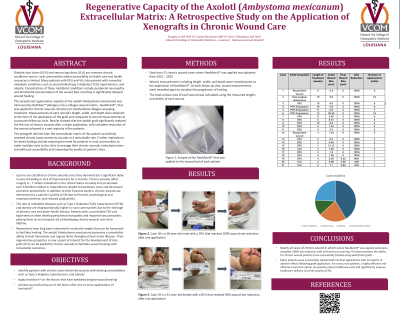
(CS-098) Regenerative Capacity of the Axolotl (Ambystoma mexicanum) Extracellular Matrix in Lower Extremity Wounds: A Case Series on the Application of Xenografts in Chronic Wound Care
Friday, April 10, 2026
Sydney Boudreaux, BS; Kerry Thibodeaux, MD FACS CWSP FACCWS FAPWCA
Introduction: Chronic lower extremity wounds are common conditions seen in rural communities where accessibility to healthcare is limited. Many patients with chronic wounds also present with comorbid metabolic conditions such as uncontrolled type 2 diabetes, hypertension, and obesity. Complications include peripheral neuropathy and diminished vascularization of epithelia, resulting in significantly delayed wound healing. Left untreated, chronic wounds can cause full limb amputations. A treatment that can overcome the socioeconomic and biophysical barriers preventing proper wound healing is a target for many hospitals and clinics, particularly in rural communities.
Methods: Data was collected from clinicians who treated refractory lower extremity wounds using axolotl grafts from 2022-2025 and retrospectively reviewed. Patient demographics such as age and sex were collected alongside comorbidities such as diabetes, hypertension, obesity, and vascular disease. The length, width, and depth of each wound were measured at every follow-up visit to calculate the area of skin that closed over time.
Results: There were 14 males, 8 females, and 1 non-reported patient who received the graft. The average age of the patient was 54.70 years. The most common comorbid conditions were type 2 diabetes, peripheral neuropathy, and venous insufficiency, while the most common chronic wounds were diabetic foot ulcers and venous leg ulcers. 21 of the 23 (91.3%) patients who received the graft achieved wound closure. The average wound area of the 21 patients was 3.85 cm2, while the average number of visits to achieve wound closure was 5.24 visits. The largest wound measured 29.25 cm2 and took 12 total visits and 19 total units of dermal patches to achieve wound closure. The smallest wound measured 0.5 cm2 and took 3 total visits and 2 total units of dermal patches to achieve wound closure.
Discussion: Complex wound management relies on the interplay between socioeconomic and biophysical factors. Comorbid conditions such as type 2 diabetes, hypertension, and peripheral neuropathy damage the vasculature and impair cellular functions necessary for the body to heal itself. In the context of patients who suffer from chronic lower extremity wounds, the need for an efficient treatment modality is desired to reduce healing time and prevent complications such as infection, scarring, and limb loss. In rural communities where accessibility to transportation and hospitals is severely limited, a skin graft derived from the axolotl can overcome these barriers due to its extraordinary ability to induce rapid re-epithelialization and closure of chronic wounds.

.jpg)