
.jpg)
Case Series/Study
Peristomal Skin Complications (PSCs) are common and significantly reduce Health-Related Quality of Life (HRQoL) indicators in ostomy patients. PSCs include dermatitis, pruritus, infections, and ulcerations. They most commonly result from chronic exposure of peristomal skin to corrosive stoma effluent. This exposure compromises the skin barrier, leading to inflammation and increased risk of infection.
Among the 1 million ostomates in the U.S., 60% report at least one PSC episode in the prior six months. This number rises to over 80% in ostomates within their first-year post-surgery. Historically, PSC management has focused on correcting pouching problems to prevent leaks, with minimal emphasis on preventive skin care beyond cleansing with warm water and gentle appliance removal.
Methods:
While proper pouch selection and gentle removal techniques remain essential in the prevention and treatment of PSCs, emerging wound care literature supports the use of a pure hypochlorous acid (HOCl) wound cleanser as a primary treatment intervention. It’s application to PSCs directly addresses the microbial and inflammatory components by reducing bioburden and maintaining optimal wound healing pH.
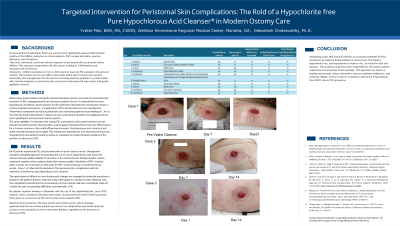
This series highlights 10 ostomates with varying PSC presentations. Each patient received peristomal cleansing with a pure HOCl cleanser for 4 minutes. Pouching issues were corrected, and gentle removal techniques were taught. HOCl cleansing was integrated into each patient’s pouching routine as standard care.
Results:
All 10 patients experienced PSC resolution within two weeks. No recurrences or clinic visits for PSCs occurred during a 3-month follow-up period.
Discussion:
Integrating a pure HOCl wound cleanser as a primary treatment for PSCs represents an evidence-based advance in ostomy care. This approach accelerates healing, reduces discomfort, improves appliance adherence, and enhances HRQoL. Further research is needed to determine HOCl’s role in PSC prevention.