Introduction: Effective wound bed preparation is critical for healing, yet bacterial burden often remains undetected by visual inspection alone. Bacterial autofluorescence imaging technology enables real time visualization of bacterial fluorescence, guiding targeted debridement. This case series illustrates its clinical utility in diverse wound types.
Methods: Four patients with chronic wounds underwent bacterial autofluorescence imaging (SnapshotGLO, Kent Imaging Inc., Calgary, Canada) prior to and during debridement. Imaging identified areas of bacterial fluorescence, which guided the removal of dead, damaged or infected tissue using appropriate techniques such as ultrasonic, curettes, or plasma jet debridement. Clinical progress was monitored until healing or substantial improvement.
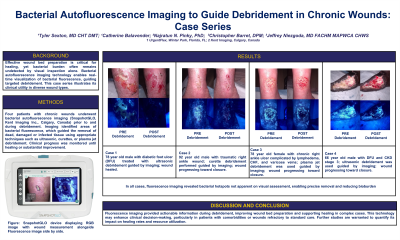
Results: Case 1: 78 year old male with diabetic foot ulcer (DFU) treated with ultrasonic debridement guided by imaging ; wound healed.
Case 2: 92 year old male with traumatic right ankle wound; curette debridement performed guided by imaging; wound progressing toward closure.
Case 3: 78 year old female with chronic right ankle ulcer complicated by lymphedema, CHF, and varicose veins; plasma jet debridement was used guided by imaging; wound progressing toward closure.
Case 4: 66 year old male with DFU and CKD stage 3; ultrasonic debridement was used guided by imaging; wound progressing toward closure.
In all cases, fluorescence imaging revealed bacterial hotspots not apparent on visual assessment, enabling precise removal and reducing bioburden.
Discussion: Fluorescence imaging provided actionable information during debridement, improving wound bed preparation and supporting healing in complex cases. This technology may enhance clinical decision making, particularly in patients with comorbidities or woundsrefractory to standard care. Further studies are warranted to quantify its impact on healing rates and resource utilization. Disclosure: “Generative AI or AI-assisted technology was used in the preparation of this work. All AI-generated content was reviewed and edited by the author(s), who accept full responsibility for its accuracy and integrity.” AI was ONLY used for text drafting to ensure better readability.

.jpg)