
.jpg)
Case Series/Study
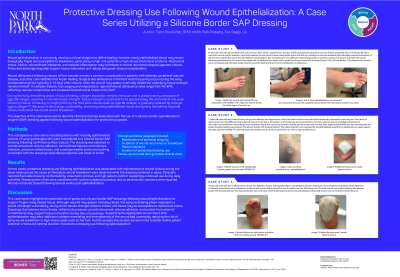
Wound epithelialization is commonly used as a clinical endpoint to define healing; however, emerging evidence suggests that newly epithelialized tissue may remain functionally fragile and susceptible to breakdown, particularly in high-risk patients or anatomical locations. Mechanical stress, friction, microclimate imbalance, and residual inflammation may contribute to wound recurrence despite apparent closure. Protective dressings may play a role in supporting tissue maturation and reducing early post-closure complications.
The objective of the case series is to describe clinical outcomes associated with the use of a silicone border superabsorbent polymer (SAP) dressing applied after wound epithelialization for protective purposes.
Methods:
This retrospective case series included patients with recently epithelialized wounds of varying etiologies who were transitioned to a novel silicone border SAP dressing following confirmed surface closure. Dressings were selected to provide atraumatic adhesion, cushioning, shear reduction, and microclimate management during the early post-epithelialization period. Clinical outcomes assessed included maintenance of epithelial integrity, incidence of wound recurrence or breakdown, patient tolerance, and duration of protective dressing use. Follow-up occurred during routine clinical visits.
Results: Across cases, protective dressing use following epithelialization was associated with maintenance of wound closure during the observation period. No cases of immediate wound breakdown were observed while the dressing was in place. Favorable conformability, atraumatic removal, and patient comfort, supporting continued adherence during daily activities were noted. Dressing wear times were consistent with routine outpatient use, and no adverse skin reactions were reported.
Discussion:
This case series highlights the potential role of protective silicone border SAP dressings following wound epithelialization to support fragile newly healed tissue. Use of the novel silicone border SAP dressing may offer a practical strategy to reduce mechanical stress and support tissue maturation during the early post-closure phase. Further prospective studies are warranted to better define patient selection criteria and optimal duration of protective dressing use following epithelialization.