Introduction: Early identification of bacterial bioburden in wounds is critical for optimizing treatment and preventing complications. SnapshotGLO, a bacterial autofluorescence imaging device, was evaluated for clinical utility in real-world settings. This abstract reportsthe findings of this validation study.
Methods: Prospective data were collected from the site between July 2025 and October 2025. Clinicians were trained on device use, and data were collected during routine wound care visits. Wound images were captured using SnapshotGLO (Kent Imaging Inc., Calgary, Canada), and bacterial culture tests were performed on selected wounds as per standard of care at the site. Device performance was assessed by comparing imaging results with culture outcomes.
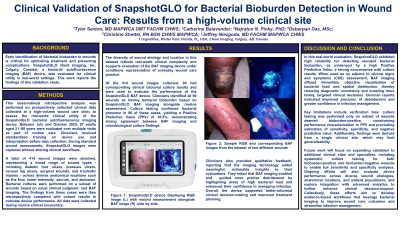
Results: A total of 414 wound images from 87 subjects were collected during this period across multiple visits. Wounds represented diverse etiologies, including diabetic ulcers, pressure ulcers, venous ulcers, surgical wounds, and traumatic injuries, located on various anatomical sites such as the foot, leg, sacrum, and abdomen. Of these, 90 images had corresponding bacterial culture results. All 90 wounds were assessed as positive for bacterial bioburden by clinicians whenusing the SnapshotGLO images along with clinical assessment. The corresponding bacterial culture tests confirmed positivity in 86 cases and negativity in 4, yielding a Positive Predictive Value (PPV) of 95.5% when using the imaging device. Clinician feedback indicated that bacterial imaging guided more effective wound debridement and improved infection management.
Discussion: SnapshotGLO demonstrated strong reliability in detecting bacterial bioburden, supporting its role as an adjunctive tool in wound care. High PPV suggests potential to reduce time to intervention and improve outcomes. Limitations include the absence of culture data for bioburden-negative images, precluding sensitivity analysis. Future work should expand validation and explore integration into clinical workflows. Disclosure: “Generative AI or AI-assisted technology was used in the preparation of this work. All AI-generated content was reviewed and edited by the author(s), who accept full responsibility for its accuracy and integrity.” AI was ONLY used for text drafting to ensure better readability.

.jpg)