
.jpg)
Laboratory Research
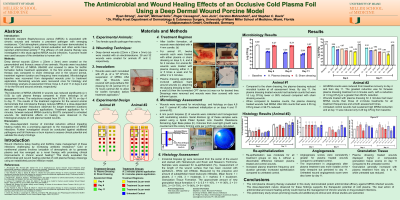
The bioburden of MRSA USA300 in wounds was reduced significantly (p ≤ 0.05) by cold plasma therapy compared to sham dressings at all assessment times. The reductions ranged from 97.8% to 99.1% on day 4 to day 11. The results of the treatment regimens for the second animal demonstrate that cold plasma therapy reduces MRSA in a dose-dependent manner with greater reductions observed for longer treatment durations and more frequent treatment applications. Treatment application for 4 minutes, 5x/week reduced MRSA counts by 99.87% compared to untreated wounds. No detrimental effects on healing were observed in the histological analysis of cold plasma treated wounds.
Discussion:
This study provides compelling evidence that large area cold atmospheric plasma therapy effectively reduces pathogenic biofilms and S. aureus burden while remaining safe for the healing process. The therapy's ability to tackle a significant public health challenge like MRSA, coupled with a lack of observed resistance development, highlights its potential as a novel antimicrobial strategy. Additional animals to substantiate these findings and examine potential mechanisms of action are warranted.