(CS-042) Fetal Bovine Dermal Scaffold in the Management of Burn Injuries and Complex Traumatic Wounds
Friday, April 10, 2026
Kristy Miller, APRN – Sarasota Memorial Hospital; Talia Selembo, BS; Victoria Young, BS
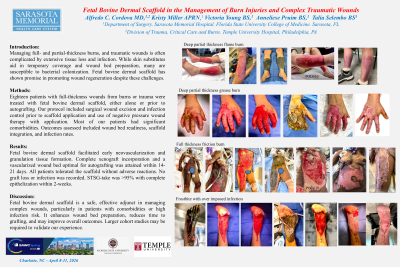
Introduction: Managing full- and partial-thickness burns, and traumatic wounds is often complicated by extensive tissue loss and infection. While skin substitutes aid in temporary coverage and wound bed preparation, many are susceptible to bacterial colonization. Fetal bovine dermal scaffold has shown promise in promoting wound regeneration despite these challenges.
Methods: Eighteen patients with full-thickness wounds from burns or trauma were treated with fetal bovine dermal scaffold, either alone or prior to autografting. Our protocol included surgical wound excision and infection control prior to scaffold application and use of negative pressure wound therapy with application. Most of our patients had significant comorbidities. Outcomes assessed included wound bed readiness, scaffold integration, and infection rates.
Results: Fetal bovine dermal scaffold facilitated early neovascularization and granulation tissue formation. Complete xenograft incorporation and a vascularized wound bed optimal for autografting was attained within 14-21 days. All patients tolerated the scaffold without adverse reactions. No graft loss or infection was recorded. STSG-take was >95% with complete epithelization within 2-weeks.
Discussion: Fetal bovine dermal scaffold is a safe, effective adjunct in managing complex wounds, particularly in patients with comorbidities or high infection risk. It enhances wound bed preparation, reduces time to grafting, and may improve overall outcomes. Larger cohort studies may be required to validate our experience.

.jpg)