
.jpg)
Health Economics
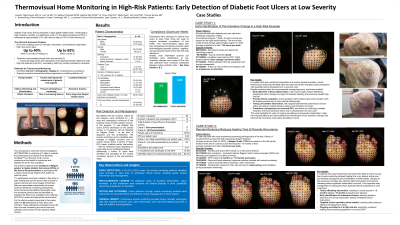
Diabetic foot ulcers (DFUs) drive disproportionate healthcare costs, a burden that becomes markedly greater in individuals with higher-risk feet, where delayed detection often results in more severe presentations and substantially higher treatment intensity. At-home remote thermovisual monitoring provides timely surveillance to identify risk early, and emerging assessment tools, such as a Visual Risk Assessment Index (VRAI), offer an opportunity to tailor monitoring to initial assessment. This analysis evaluates the potential cost implications of remote monitoring while incorporating a visual risk–stratification approach to contextualize outcomes.
Methods:
This retrospective, multisite analysis included adults with diabetes and prior ulcer history using an in-home thermovisual monitoring device and who have undergone at least three quarterly podiatric record reviews. Daily scans were remotely evaluated, and abnormalities were escalated per protocol. Each participant’s initial scan was categorized using a visual risk framework similar to the VRAI concept described in prior work, aligning monitoring outcomes with the underlying level of risk at enrollment. Outcomes assessed included severity of ulcers at first presentation, detection of pre-ulcerative lesions, and expected implications for healthcare resource utilization.
Results:
Signs of foot risk were consistently identified and communicated prior to severe ulceration. Visual risk classifications at time of first scan revealed that many individuals exhibited notable foot-health vulnerabilities, including superficial ulcers on admission that were treated prior to referral, helping contextualize the need for subsequent escalations and emphasizes the value of ongoing, routine surveillance. Ulcers that developed during monitoring were generally identified while low severity, and pre-ulcerative tissue changes were frequently flagged and managed promptly, preventing progression. These trends suggest that remote monitoring may shift many clinical encounters from higher-intensity, higher-cost interventions toward earlier, lower-cost, and lower-intensity management.
Discussion:
Proactive detection and management of foot complications in a high-risk population have meaningful health-economic implications. By limiting disease progression, averting preventable ulcer formation, and reducing the likelihood of severe presentations, remote thermovisual monitoring may substantially reduce downstream care costs. Incorporating a visual risk assessment model helps identify those most likely to benefit. While full economic modelling is ongoing, interim findings indicate that sustained monitoring may yield significant cost avoidance through timely intervention and more efficient use of clinical resources.