(CS-077) Real-World Clinical Experience with an Autologous Blood Patch System in the Treatment of Chronic Diabetic Ulcers: A Multicenter Case Series
Friday, April 10, 2026
Brock Liden, MD DPM; Jason Mendivil, DPM; Robert Thompson, MD – WoundCentrics; Markus Gitterle, - – Medical Director, -, WoundCentrics
Introduction: Chronic wounds such as diabetic foot ulcers (DFUs) remain among the most resource-intensive conditions in wound care, often unresponsive to advanced dressings or topical agents. Biologic therapies that reactivate the body’s own regenerative capacity using autologous materials represent a promising new approach. The autologous blood patch system enables the preparation of a stabilized whole-blood clot at the point of care, creating a biologically active wound matrix rich in platelets, immune cells, and growth factors that promote vascularization and epithelial repair. This report summarizes early clinical experience from patients treated across multiple centers.
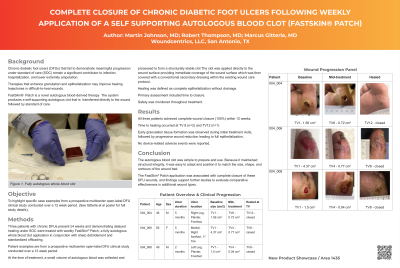
Methods: This observational case series included patients with chronic DFUs (n≈10) and VLUs (n≈3) who received weekly applications of an autologous blood patch system in addition to standard of care (SOC). Each patch was produced from a small volume of the patient’s venous blood and applied directly to the wound bed for up to 12 weeks. Outcomes assessed included time to granulation, percent area reduction (PAR), epithelial advancement, exudate control, and patient-reported tolerance. Photographic documentation and follow-up visits were used to monitor progress and closure stability.
Results: Across wound types, the autologous blood patch system promoted rapid granulation and visible epithelialization within 2–4 weeks. Most DFUs achieved >70% area reduction within 6 weeks, with several reaching complete closure by week 10. VLUs demonstrated significant improvement in granulation tissue, exudate management, and overall tissue quality. Patients reported high comfort and ease of application, and no treatment-related adverse events occurred. Early results indicate that the biologically active clot environment accelerates wound progression toward closure compared with expected outcomes under SOC alone.
Discussion: This real-world case series supports the feasibility and clinical benefit of an autologous, point-of-care blood patch system as an adjunctive therapy for chronic wounds of mixed etiology. The therapy’s biologic activity, simplicity, and safety make it a practical option for integrating autologous regenerative principles into everyday wound management. Ongoing data collection and expanded analysis will further define its role in comprehensive chronic wound care.

.jpg)