
.jpg)
Health Economics
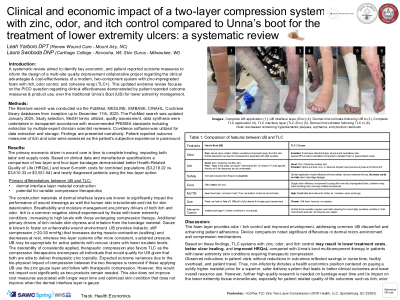
A systematic review aimed to identify key economic and patient reported outcome measures to inform the design of a multi-site quality improvement collaborative project regarding the clinical advantages & cost-effectiveness of a modern, two-component system with zinc-impregnated foam with itch, odor control, and cohesive wrap (TLC+). This updated evidence review focuses on the PICO question regarding clinical effectiveness demonstrated by patient reported outcome measures & product use, over the traditional Unnas Boot (UB) for lower extremity management. The literature search was conducted via the PubMED, MEDLINE, EMBASE, CINAHL, Cochrane library databases from inception up to December 11th 2025. The Pubmed search was updated January 2025. Study selection, quality assessment, data synthesis were undertaken in transparent accordance with recommended PRISMA standards including extraction by multiple expert clinician scientist reviewers. Findings are presented narratively. Patient reported outcome measures of itch and odor were assessed as the patient's subjective experience is paramount. The primary economic driver in wound care is time to complete healing, impacting both labor and supply costs. A comparison of two-layer and four-layer bandages demonstrated better Health-Related Quality of Life (HRQoL) and lower 6-month costs for combined populations ($3,218.22 vs. $3,610.33 or $3,531.64) and newly diagnosed patients using the two-layer option. Supply chain efficiency is improved by using all-in-one kits (zinc+foam, wrap, stocking) over sourcing multiple components. Guided application visual indicators enhance safety, reduce treatment failures, and decrease costly re-visits due to bandage slippage. The foam layer provides odor/itch control and improved envelopment, addressing common UB discomfort and enhancing patient adherence. Device comparison noted significant differences in dermal micro-environment and compression mechanisms. Based on these findings, TLC systems with zinc, odor, and itch control may result in lower treatment costs, better ulcer healing, and improved HRQoL compared with Unnas boot multicomponent therapy in patients with diagnosed lower extremity ulcers. Observed reductions in patient visits without reductions in outcomes reflected savings in nurse time, facility overhead, and patient travel. Thus, non-inferiority dictates a health economics position centered on paying a subtly higher material price for a superior, safer delivery system that leads to better clinical outcomes and lower overall resource use. However, further high-quality research is needed on bandage wear time and its impact on the lower extremity tissue microclimate, especially for patient related quality of life outcomes such as itch, odor.
Methods:
Results:
Discussion: