
.jpg)
Case Series/Study
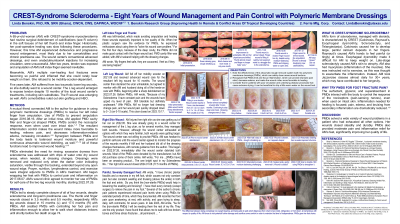
A 65-yr-old woman (“AM”) with CREST-syndrome scleroderma had routine surgical debridement of calcifications from calcinosis in the soft tissues of her left thumb and index finger. Post-operative healing had always been slow, but this time her comorbidities and chronic prednisone use led to two years of progressive wound enlargement. OnabotulinumtoxinA to increase circulation was unsuccessful. Amputation of AM’s left index finger seemed inevitable. Meanwhile, AM’s multiple non-healing foot fractures were becoming so painful and inflamed that she could rarely bear weight on them. Next, she suffered from two traumatic lower leg wounds; one enlarged to expose tendon despite 10 months of local wound clinic treatment, including CAMPS. AM’s comorbidities ruled out grafting and HBO.
Methods:
A mutual friend connected AM to the author for guidance in using polymeric membrane dressings (PMDs) to rescue her finger from amputation. PMDs alter the nociceptor response, even when used over intact skin.1–3 The resultant inflammation control makes the wound milieu more favorable to healing, relieves pain, and decreases inflammation-related edema, increasing circulation.4–6 Synergism between PMDs and the body leads to balanced wound moisture and powerful continuous atraumatic wound debriding, as well.3,7–10 All of these functions improve wound healing.4,10
After an initial rinse, AM applied PMD cavity filler and a finger-cot shaped PMD to prevent finger amputation beginning on 2016.08.16. AM began wrapping her feet with PMDs to control pain and inflammation on 2017.06.07. Management of the two leg wounds began on 2022.07.26. PMDs eliminated the need for rinsing; excessive dryness from scleroderma was addressed with drips of water at dressing changes. Prayer, nutrition, lymphedema control, and exercise were integral in AM’s treatment.
Results:
PMDs led to steady closure of all of four wounds, despite the CREST-syndrome scleroderma and prednisone. AM credited PMDs with controlling her foot pain and inflammation enough to allow her to walk short distances until shortly before her death at age 74.
Discussion:
PMDs solved a wide variety of wound problems in a patient who had exhausted all other options. They also provided moderate pain and inflammation relief for AM’s extremely damaged feet, significantly improving her quality of life.