
.jpg)
Clinical Research
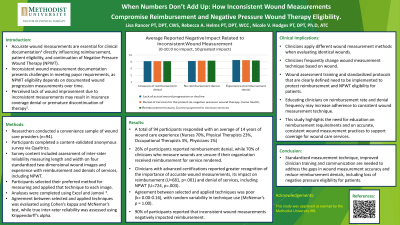
A total of 94 participants responded, including nurses (70%), physical therapists (23%), occupational therapists (3%), and physicians (1%), with an average of 14 years of wound care experience. Three measurement techniques were identified: Box Method (4), clock-face method, and longest length/widest width method (5). Although 78% of respondents believed wound measurement standardization was achievable, agreement between selected and applied techniques was poor (κ = 0.00–0.16), with random variability in technique use (McNemar’s p = 1.00).
Ninety percent of participants reported that inconsistent wound measurements negatively impacted reimbursement. Twenty-six percent reported experiencing reimbursement denial, while 71% were unsure whether their reimbursement had been affected. Clinicians with advanced certifications reported greater recognition of the importance of accurate wound measurements, its impact on reimbursement (U = 681, p = .001) and denial of services, including NPWT (U = 724, p = .003).