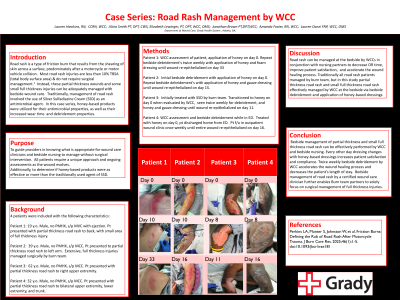
Introduction: At a level one trauma center, we encounter a high volume of patient with road rash of varying thickness and total body surface area (TBSA) involvement. Road rash represents a frequent clinical challenge in trauma care with limited to no establish guidelines for their management. This often leads to variability in treatment approached and patient outcomes.
Methods: Recognizing this gap, our team sought to develop a structure protocol to ensure strategic, timely and effective bedside management of road rash injuries. We moved away from the traditional silver based topical treatment recommendation and utilize a honey-based dressing. We engaged the trauma and surgical team to create a clinical algorithm that stratified patients by wound depth and TBSA Create a standardized bedside wound care order set to automatically trigger a wound care consultation and streamlined timely reposnse reducing varibility in care.
Results: Implementing these strategies, we observed improvement wound care outcomes regardless of TBSA involvement, improved patient satisfaction, if needed timely surgical intervention, improved length of stay and nurse satisfaction.
Discussion: These is a pressing need for broader discussion and consensus on the management of road rash injuries. Our experience demonstrates that bedside management is not only feasible but often preferrable even in cases with significant TBSA. It is essential to have wound care involved in the coordination and response of the trauma and surgical team to ensure wound care protocol are initiated without delay. Moving away from traditional management approaches have demonstrate to show effective wound outcomes. These strategies can be adopted across hospital and urgent care settings to help standardize car and ultimately improve patient outcomes for this common yet under discussed injury pattern.

.jpg)