(EBP-012) A Synergistic Multimodality Treatment Approach to Address the Key Drivers of Wound Chronicity
Friday, April 10, 2026
Joseph Raffetto, MD; David Dexter, MD, FACS; Matthew Regulski, DPM, FFPM RCPS (Glasg), ABMSP, FASPM; Michael Edmonds, MD, FACS, FAAOS; Kathleen Ozsvath, MD; Melodie Blakely, DPT, MS, CWS
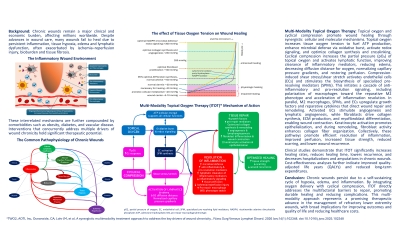
Introduction: Chronic wounds remain a major clinical and economic burden, affecting millions worldwide. Despite advances in wound care, many wounds fail to heal due to persistent tissue hypoxia, unresolved inflammation, lymphatic dysfunction, edema, and ischemia–reperfusion injury. These interrelated mechanisms are further compounded by comorbidities such as obesity, diabetes, and vascular disease, highlighting the need for therapeutic approaches that address multiple barriers to repair simultaneously.
Methods: We review the pathophysiological drivers of wound chronicity—including the inflammation/edema/hypoxia cycle, endothelial dysfunction, and impaired lymphatic clearance—and summarize evidence on the roles of oxygen, nitric oxide, redox signaling, mechanotransduction, and specialized pro-resolving lipid mediators (SPMs) in tissue repair. We then evaluate two complementary, non-invasive interventions: topical oxygen therapy (TOT), which directly elevates wound tissue oxygen tension to support oxidative burst, angiogenesis, collagen synthesis, and SPM biosynthesis; and intermittent compression (IC), which enhances lymphatic drainage, reduces edema, normalizes capillary gradients, and activates mechanosensitive repair pathways in endothelial cells, macrophages, fibroblasts, and keratinocytes.
Results: Chronic wound pathophysiology involves overlapping mechanisms of hypoxia, inflammation, edema, endothelial dysfunction, and reperfusion injury. Both topical oxygen therapy and intermittent compression independently improve oxygen delivery, perfusion, inflammation resolution, and tissue remodeling. When combined as intermittent topical oxygen therapy (ITOT), these modalities exert synergistic effects, amplifying oxygen bioavailability and potentiating anti-inflammatory, angiogenic, and reparative signaling. Clinical studies demonstrate that ITOT significantly increases healing rates, reduces healing time, lowers recurrence, and decreases hospitalizations and amputations in chronic wounds. Cost-effectiveness analyses further indicate improved quality-adjusted life years and reduced long-term expenditures.
Discussion: Chronic wounds persist due to a self-sustaining cycle of hypoxia, edema, and inflammation. By integrating oxygen delivery with cyclical compression, ITOT directly addresses the multifactorial barriers to repair, promoting durable healing and reducing complications. This multi-modality approach represents a promising therapeutic advance in the management of refractory lower extremity wounds, with broad implications for improving outcomes and quality of life and reducing health care costs.

.jpg)