
.jpg)
Practice Innovations
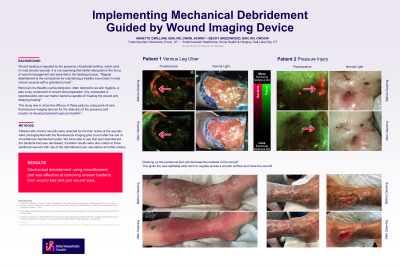
Wound healing has been shown to be impeded by the presence of bacterial biofilms which exist in most chronic wounds and more recently, including on the periwound skin. “Regular debridement is the cornerstone for maintaining a healthy wound bed in most chronic wounds with a potential to heal.” 1 “Periwound complications can delay healing in a variety of ways, which in turn increases the risk of infection; increased bacterial burden can in turn increase inflammatory response and delay healing, creating a vicious cycle”2
Methods:
Our homecare agency uses monofilament debridement pads to mechanically debride wounds between wound clinic visits. The nurses were only using the pads to clean the wound bed. We added cleansing the periwound skin after using point-of-care fluorescence imaging devices that detected the presence and location of elevated bacterial loads and biofilm.
Results:
We have many pt’s with slow healing chronic wounds. Wound photos and fluorescence imaging were taken prior to cleansing the wound. Surprisingly, the results of the imaging showed that the periwound was more contaminated with bacteria than the wound bed. The wounds and periwound areas were then cleansed using the monofilament debridement pads and the same imaging was repeated. The results showed that after cleansing with the monofilament pads the bacterial load was significantly decreased in the periwound area.
Discussion: “Optimal wound-bed preparation consists of regular debridement to remove devitalized tissues, reduce bacterial load, and to establish an environment that promotes healing”3. However, if the periwound skin is contaminated this will also slow healing. With these results in hand, our providers continue to order monofilament debridement between visits to clean the periwound skin to promote increased healing. This poster will show examples of significant cleaning and healing of the wound and periwound with the use of the pads.