(EBP-021) Reducing Risk, Enhancing Outcomes: Pressure Injury Prevention Strategies in the Hyperbaric Setting
Friday, April 10, 2026
Marcus Gitterle, MD, FACCWS – CMO, WoundCentrucs
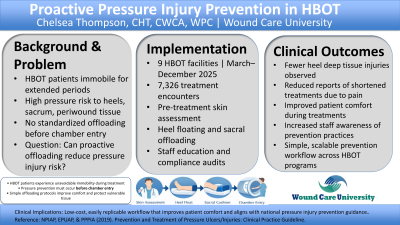
Introduction: This initiative was developed to establish a standardized pre-treatment offloading and positioning protocol across nine hyperbaric oxygen therapy (HBOT) facilities to reduce pressure-injury incidence. HBOT requires extended immobility; many patients cannot reposition independently once in the chamber, increasing risk for pressure-related harm, including deep tissue injury (DTI). The intervention required proactive heel elevation and individualized positioning to offload known risk areas before chamber entry, addressing a documented lack of consistent pre-treatment protocols across sites.
Methods: After an internal review identified inconsistent pre-treatment offloading, we implemented a policy requiring a documented pressure-risk assessment before each HBOT session. Clinicians floated heels, applied positioning devices, and offloaded any vulnerable sites prior to chamber closure. Staff were trained on the revised workflow, and adherence was monitored via direct observation. We tracked outcomes using patient-reported pain, incidence of new pressure injuries, and rates of heel deep tissue injury (DTI).
Results: Implementation of this practice innovation resulted in measurable improvements across facilities. Patients reported reduced pain during and after HBOT sessions, and incidence of heel DTI significantly declined compared to baseline. Additionally, early observations indicated enhanced staff awareness of pressure prevention strategies and increased consistency in patient preparation practices.
Discussion: Small, deliberate workflow changes can meaningfully improve outcomes for vulnerable HBOT patients. By cutting pressure-injury rates and related pain, this approach improves comfort, lowers complication-related costs, and provides a practical model other HBOT programs can adopt. Proactive offloading and positioning before chamber entry is a low-cost, reproducible step that reduces preventable harm. Embedding it into routine HBOT protocols strengthens patient safety and overall quality of care.

.jpg)