
.jpg)
Case Series/Study
This presentation reviews a clinical analysis based on the treatment of seven patients with
chronic wounds in a long-term care (LTC) facility in Maryland and Washington, DC. The
study focuses on the use of pure Hypochlorous Acid (pHA)-based wound cleansers in
managing Stage III and IV pressure injuries and vascular ulcers, emphasizing the impact on
healing outcomes under the care of a specialized chronic wound management team.
Methods:
Patient cases included Stage IV sacrococcygeal and hip pressure injuries, as well as
vascular ulcers of the lower extremities. Initial wound assessments documented wound
dimensions, the presence of slough, and microbial characteristics. pHA cleansers were
applied systematically, alongside debridement, to reduce microbial burden and facilitate
wound bed preparation. Follow-up assessments were conducted to measure healing
progress.
Results:
Discussion:
The presentation outlines significant improvements in wound characteristics across all
cases, including:
• Reduction in wound size, depth, and slough.
• Enhanced wound bed health and reduced odor.
• Faster progress toward closure for chronic, non-healing wounds.
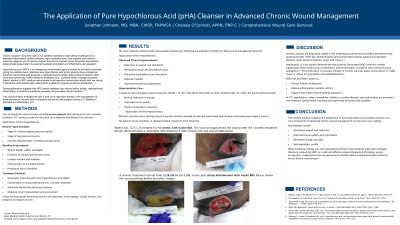
For example, one sacrococcygeal wound initially measured 18 cm × 11 cm × 6.5 cm on
December 4, 2024, and showed marked improvement by December 26, 2024, with
reduced slough and improved tissue quality. Similarly, bilateral vascular ulcers and hip
wounds demonstrated notable recovery trajectories.