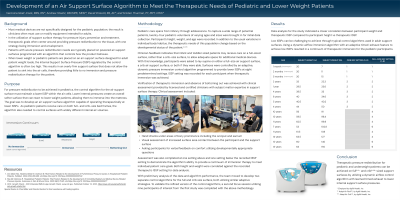
Methods: Twenty-four pediatric volunteers of varying ages were brought in to gather initial data. Participant’s height, weight, and age were recorded. Participants were asked to lay supine on the full-size air surface, the crib air surface, or both. Surfaces were controlled by an adaptive, dynamic pressure immersion control algorithm programmed to provide lower ISSPs. ISSP was recorded for each patient when therapeutic immersion was achieved. Verification of therapeutic immersion and absence of bottoming out was achieved with clinical assessment, provided by licensed and certified clinicians. Both height and weight were correlated against therapeutic ISSP for data analysis. To validate a refined version of the control algorithm, a second focus session utilizing nine participants of interest from the first study was completed.
Results: Data analysis for the study indicated a closer correlation between participant weight and therapeutic ISSP compared to participant height vs therapeutic ISSP. Low ISSPs can be challenging to achieve through typical control algorithms used in adult support surfaces. Using a dynamic airflow immersion algorithm with an adaptive timed-exhaust feature to achieve low ISSPs resulted in therapeutic immersion for the pediatric participants.
Discussion: Therapeutic pressure redistribution for pediatric and underweight patients can be achieved on full- and crib-sized support surfaces by utilizing a dynamic airflow control algorithm with learned timed exhaust to lower internal support surface pressures.

.jpg)