(CS-149) Successful Healing of a 4-Year-Old Refractory Wound Following Skin Cell Suspension Autograft and Meshed Split-Thickness Skin Graft: A Case Study
Introduction: Wounds lasting longer than 12 weeks can significantly impact patient quality of life, often requiring multiple interventions with limited success. When traditional wound healing modalities fail to generate a well-vascularized wound bed and re-epithelialization, alternative techniques should be considered.When applied in conjunction with a meshed split-thickness skin graft (mSTSG), skin cell suspension autograft (SCSA) supports closure of chronic wounds by accelerating epithelial coverage, thereby reducing the time to healing and minimizing graft complications.This case involves 4-year-old chronic bilateral lower extremity wounds that successfully achieved wound closure following treatment with a mSTSG and SCSA.
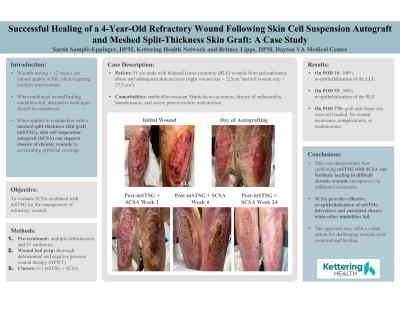
Methods: A 51-year-old male presented with bilateral lower extremity wounds resulting from polysubstance abuse and subsequent skin necrosis. He had multiple co-morbidities including methicillin-resistant Staphylococcus aureus, a history of endocarditis, homelessness, and severe protein/calorie malnutrition.Wound sizes measured 27.5 cm2 on the left leg and 225 cm2 on the right.Over 4 years, the patient experienced 15 admissions and was evaluated by orthopedics, general surgery, and podiatry. Initial wound management included multiple debridements and three rounds of intravenous antibiotics. Negative pressure wound therapy (NPWT) was utilized to support wound bed preparation prior to grafting.Once well-vascularized, the wound beds were treated with 6:1 mSTSGs, with donor skin harvested from the bilateral thighs. SCSA was subsequently applied and covered with non-adherent dressing and NPWT. The patient was discharged to a skilled nursing facility on the day of autografting and underwent routine outpatient follow-up to monitor re-epithelialization, wound healing, and complications.
Results: Complete wound closure (100% re-epithelialization) was achieved on day 16 post-autografting for the left lower leg wound and day 93 for the right lower leg wound.At the 9-month follow-up, the patient had no wound recurrence, complications, or readmissions.
Discussion: This case demonstrates that combining mSTSG with SCSA can facilitate healing in difficult chronic wounds unresponsive to traditional treatments. SCSA provides effective re-epithelialization of mSTSG interstices and sustained closure when other modalities fail as evident in successfully closing these 4-year-old lower leg wounds. This approach may offer a viable option for challenging wounds with compromised healing.

.jpg)