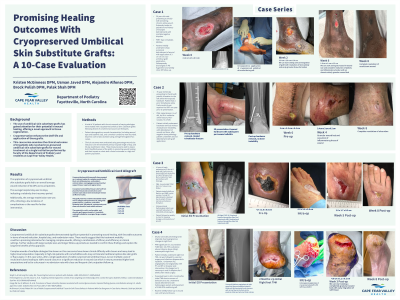
(CS-108) Promising Healing Outcomes With Cryopreserved Umbilical Skin Substitute Grafts: A 10-Case Evaluation
Friday, April 10, 2026
Alejandro Alfonso, DPM; Michael Broussard, DPM; John Harris, DPM; Brock Polish, DPM – Cape Fear Valley; Palak Shah, DPM; Ashley Thompson, DPM; Javed Usman, DPM; Riley Westover, DPM
Introduction: The use of umbilical skin substitute grafts has gained attention for their potential in wound healing, offering a novel approach to tissue regeneration. Cryopreservation enhances the shelf-life and application of these grafts. This case series examines the clinical outcomes of 10 patients who received cryo-preserved umbilical skin substitute grafts for wound treatment.
Methods: A total of 10 patients with varying wound types were treated with cryopreserved umbilical skin substitute grafts. Wound healing was assessed based on the percentage of wound reduction, length of hospital stay, and readmission rates. Patient demographics, average hemoglobin A1C, wound characteristics, and clinical outcomes were recorded.
Results: The application of cryo-preserved umbilical skin substitute grafts led to an overall average wound reduction of 62.68% across all patients. The average hospital stay was 5.6 days, indicating a relatively short recovery period. Additionally, the average readmission rate was 20%, reflecting a low incidence of complications or the need for further intervention.
Discussion: Cryo-preserved umbilical skin substitute grafts demonstrated significant potential in promoting wound healing, with favorable outcomes in terms of wound reduction, hospital stay, and readmission rates. These results suggest that this treatment modality could be a promising alternative for managing complex wounds, offering a combination of efficacy and efficiency in clinical settings. Further studies with larger sample sizes and longer follow-up periods are needed to confirm these findings and explore the long-term benefits of this approach.

.jpg)