(CS-050) Correlation of Reduction of Exudate, Pain and Wound Size (Healing) in Refractory Wounds to Quality of Life; Emotional and Social well-being; a Veterans Story
Friday, April 10, 2026
Introduction: Persistent non-healing wounds can lead to anxiety, depression and significantly impact the quality of life (QOL) for veterans, affecting their physical and emotional well-being. These wounds can be malodorous and heavily exudating, causing significant pain and limit mobility while creating social isolation.1 Additionally, veterans experience higher rates of pain compared to non-veterans, affecting their ability to participate in daily activities.2 Synthetic materials such as bioactive glass (BG) are becoming commercially relevant in the reduction of pain through the support of rapid granulation and epithelization3, which support a sustained wound healing environment while decreasing exudate and discomfort through improved healing.
Methods: Two veterans with a total of five highly exudating and painful venous ulcers greater than 8-10 months old were treated. The patients were unable to tolerate debridement or compression due to pain and had previously failed to heal utilizing multiple advanced treatment modalities. Patients became confined to their homes due to exudate, pain and limited mobility. Wounds were treated with weekly applications of BG wound matrix.
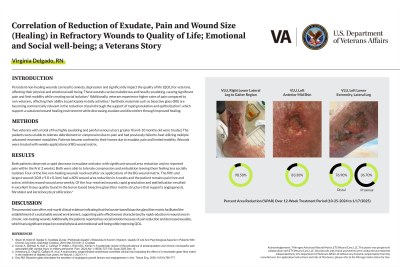
Results: Both patients observed a rapid decrease in exudate and odor with significant wound area reduction and no reported pain within the first 2 weeks]. Both were able to tolerate compression and ambulation leaving them feeling less socially isolated. Four of the five non-healing wounds resolved after six applications of the BG wound matrix. The fifth and largest wound (10.8 x 9.0 x 0.3cm) had a 60% wound area reduction in 6 weeks and the patient remains pain free and active, with decreased wound area weekly. Of the four resolved wounds, rapid granulation and epithelization resulted in excellent tissue quality found in the boron-based bioactive glass fiber matrix structure that supports angiogenesis, fibroblast and keratinocyte proliferation.4
Discussion: The presented case offers real-world clinical evidence indicating that the borate-based bioactive glass fiber matrix facilitated the establishment of a sustainable wound environment, supporting early effectiveness characterized by rapid reduction in wound area in chronic, non-healing wounds. Additionally, the patients reported less social isolation because of pain reduction and decreased exudate,which had a significant impact on overall physical and emotional well-being while improving QOL.

.jpg)