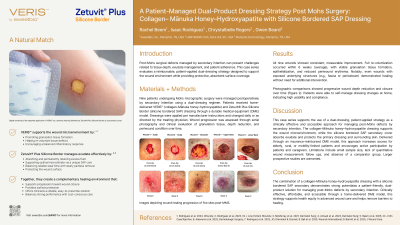
Introduction: Mohs micrographic surgery (MMS) is a skin cancer removal procedure that produces postoperative wounds that can often be difficult to heal due to reduced vascularity, fragile/thin skin, and coexisting medical conditions. Although secondary intention healing (SIH) remains a standard management approach, it may be associated with prolonged healing and less favorable cosmetic outcomes. Published wound care strategies in this setting traditionally emphasize wound closure (surface area) using a single-product intervention. In contrast, an affordable deliberate dual-dressing strategy,pairing a bioengineered primary dressing with a proactive yet gentle super absorbing secondary cover, may more effectively support both deep tissue repair and surface healing in post-MMS cases. This case serieshighlights the clinical success observed with a specific combination treatment plan: daily reapplication of a collagen–Mānukahoney–hydroxyapatite dressing (CHD) used as the primary contact layer and a siliconebordered SAP (superabsorbent polymer)cover used as the secondary wound dressing, together enabling consistent, patient-managed wound progression after MMS.
Methods: This case series evaluated an insurance-reimbursed, dual-product approach using the CHD with a siliconebordered SAP cover in nine post-MMS wounds managed by SIH. Patients received both dressings and an antimicrobial wound irrigation solution via a durable medical equipment (DME) home-delivery model and self-applied the dressings at home according to manufacturer guidelines. Healing progression was documented with before-and-after images and assessed qualitativelyfor granulation tissue formation, erythema/inflammation, and epithelialization and quantitively for wound depth.
Results: The average wound area was 8.4cm2 with an average depth of 0.6cm. Across all cases, the CHD + siliconebordered SAP dual-dressing regimen was associated with clear clinical improvement, including full re-volumization within 6 weeks (average), increased granulation tissue, reduced erythema, and progressive closure, even in wounds with exposed underlying tissue.
Discussion: These real-world findings suggest that the specific combination of the CHD and a siliconebordered SAP can support effective healing in post-MMS wounds managed by SIH. Beyond wound progression, the affordable, insurance-covered DME home-delivery model may improve access and support adherence in an older, comorbidity-burdened patient population. Collectively, this two-product, patient-managed approach represents an accessible, clinically effective,low-cost, and patient-centered option for enhancing outcomes in dermatologic surgery.

.jpg)