
.jpg)
Laboratory Research
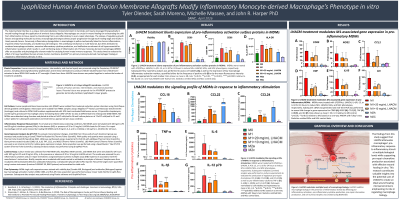
Inflammation is a natural response to injury, and its regulation is vital for effective wound healing. Excessive or prolonged inflammation hinders wound healing, leading to chronic or fibrotic wounds. Macrophages play an essential role in the initiation and resolution of acute inflammation with distinct macrophage polarizations aiding in the wound healing cascade. This in vitro study assessed whether lyophilized human amnion chorion membrane (LHACM*) could influence the inflammatory phenotype of primary monocyte-derived macrophages (MDMs) and shift them toward a pro-repair macrophage phenotype.
Methods:
LHACM was prepared using the PURION® process, consisting of gentle cleansing, followed by lyophilization and terminal sterilization. Primary monocytes were isolated from peripheral blood mononuclear cell (PBMC) samples using magnetic negative selection and differentiated into macrophages through culture with granulocyte-macrophage colony-stimulating factor (GM-CSF). The resulting MDMs were polarized with inflammatory stimuli in the presence or absence of multiple LHACM treatment concentrations. Macrophage phenotype was assessed by analyzing surface marker expression utilizing flow cytometry while cytokine production was quantified using Multiplex Luminex analysis.
Results:
In vitro MDMs polarized with inflammatory stimuli exhibited reduced inflammatory signatures when treated with LHACM extract which was reflected in both surface marker expression and cytokine production. LHACM treatments decreased the expression of activation markers on the cell surface, suggesting a shift toward an inflammation-resolving, pro-repair macrophage phenotype. Additionally, production of acute inflammatory cytokines was dampened while levels of pro-resolution chemokines were elevated in LHACM-treated MDMs.
Discussion:
Primary MDMs were utilized to capture the interplay of factors contributing to heterogeneity in human immune responses. This study’s preliminary findings suggest that LHACM can modulate inflammatory macrophage biology by attenuating pro-inflammatory responses and supporting chemokine production associated with effective wound healing in vitro. LHACM treatment’s resulting attenuation of pro-inflammatory signaling may support the wound healing cascade by decreasing the risk of inflammatory dysregulation.