
.jpg)
Case Series/Study
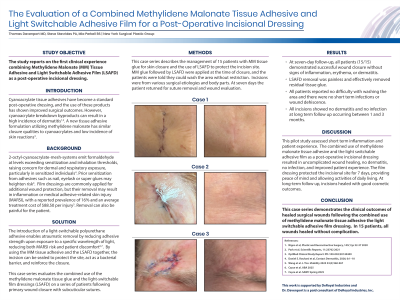
Cyanoacrylate tissue adhesives have become a standard post operative dressing and the use of these products has shown improved surgical outcomes. However, cyanoacrylate breakdown products can result in a high incidence of dermatitis1,2. A new tissue adhesive formulation utilizing methylidene malonate has similar closure qualities to cyanoacrylates and low incidence of skin reactions. Film dressings are commonly applied for additional wound protection, but their removal may result in inflammation or medical adhesive-related skin injury (MARSI), with a reported prevalence of 16% and an average treatment cost of $88.50 per injury3. Removal can also be painful. The introduction of a light-switchable polyurethane adhesive enables atraumatic removal by releasing upon exposure to a specific wavelength of light, reducing both MARSI risk and patient discomfort4,5. By using these products together to create a combined dressing the incision can be sealed to further protect and reinforce the closure.
This case series evaluates the combined use of the methylidene malonate tissue glue and the light-switchable film dressings (LFD) on a series of patients following primary wound closure.
Methods:
This case series describes the management of 15 patients with the combined tissue glue and LFD primary wound closure. Combined dressings were applied at the time of closure and the patients were told they could wash the area without restriction. At seven days each patient returned to the clinic for suture removal and wound evaluation. Primary outcomes include successful wound closure without erythema, inflammation, or dermatitis. There were no infections or wound dehiscence.
Results:
At seven-day follow-up, all patients demonstrated successful wound closure without signs of inflammation, erythema, or dermatitis. LFD removal was painless and effectively removed residual tissue glue.
Discussion: In this preliminary pilot study this combined approach dressing resulted in uncomplicated wound healing and improved patient experience while allowing the patients to have a 7 day dressing.