(CS-061) Importance of Holistic Pre-operative Medical and Psychosocial Optimization in Advanced Hidradenitis Suppurativa: A Case Report
Friday, April 10, 2026
James Pai, MS; Jessica Reid, MS; Abigail Chaffin, MD
Introduction:
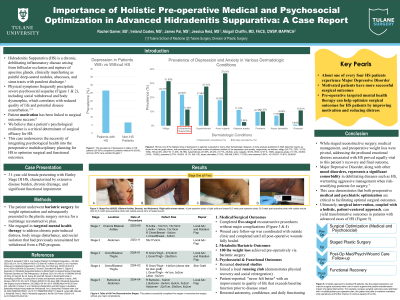
Hidradenitis Suppurativa (HS) is a chronic, debilitating inflammatory disease arising from follicular occlusion and rupture of apocrine glands, clinically manifesting as painful deep-seated nodules, abscesses, and sinus tracts with purulent discharge.1 These physical symptoms frequently precipitate severe psychosocial sequelae, including social withdrawal and body dysmorphia, which correlates with reduced quality of life and potential disease exacerbation.2,3 We posit that a patient’s psychological resilience is a critical determinant of surgical efficacy. This case underscores the necessity of integrating psychological health into the preoperative multidisciplinary planning for HS to optimize surgical and functional outcomes.
Methods:
We describe the case of a 34-year-old female presenting with Hurley Stage III HS, characterized by extensive disease burden, chronic drainage, and significant functional impairment. Following medical advice, the patient underwent bariatric surgery for weight optimization and subsequently presented to the plastic surgery service for a multistage reconstructive plan. Concurrently, she engaged in targeted mental health therapy to address chronic pain-induced distress, body image disturbance, and social isolation that had previously necessitated her withdrawal from a PhD program.
Results:
To date, the patient has successfully completed four staged surgical procedures without major perioperative complications. Following surgical intervention, she has resumed her doctoral studies and reports a marked improvement in quality of life, exceeding baseline function prior to disease onset as the patient states that she has “never felt better”. Subjective assessment reveals high patient satisfaction, with the patient citing a meaningful restoration of autonomy, confidence, and daily functioning.
Discussion: While staged reconstructive surgery, medical management, and preoperative weight loss were pivotal, addressing the profound emotional distress associated with HS proved equally vital to this patient’s recovery and final outcome. Major Depressive Disorder, along with other mood disorders, represents a significant comorbidity in debilitating diseases such as HS, warranting aggressive management when risk-stratifying patients for surgery.4 This case demonstrates that both preoperative medical and psychiatric optimization are critical to facilitating optimal surgical outcomes. Ultimately, surgical intervention, coupled with a holistic, patient-centered approach, can yield transformative outcomes in patients with advanced cases of HS.

.jpg)