(PI-015) Implementation of a Digital Wound Care Technology Across a Rural Hospital System
Friday, April 10, 2026
Isabelle Choon, MPH – Research Associate, Institute for Better Health, Trillium Health Partners; Amber Herrington, RN, BSCN, IIWCC – Nurse Clinician, Skin, Wound, Ostomy, and Continence Care, Nurse Clinicians, Brightshores Health System; Robert Fraser, BScN, MN, RN, NSWOC, WOCC – Acting Chief Product Officer, Swift Medical; Heba Tallah Mohammed, PhD – Director, Research and Clinical Innovation, Swift Medical; Basnama Ayaz, PhD – Post Doctoral Fellow, Swift Medical; Rebecca Brookham, PhD, RKin, CIC – Director, Office of Research & Innovation, Brightshores Health System; Ibukun Abejirinde, PhD, MD – Scientist, Institute for Better Health, Trillium Health Partners
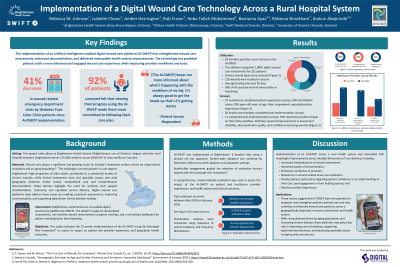
Introduction: In 2024, a rural, multi-site health system implemented an artificial intelligence-based digital wound care platform (AI-DWCP) across its six hospital locations in Grey and Bruce Counties, Ontario, Canada, serving 175,000 residents across a geographically dispersed area. This region faces challenges with access to specialized wound care, standardized assessment, consistent documentation, and optimal care outcomes, impacting continuity of care. The AI-DWCP aims toenable standardized, AI-enhanced wound assessments, reduce reliance on the region’s singlewound specialist, and strengthen documentation practices. Outcomes from the first 18 monthsof implementation are reported.
Methods: Implementation commenced at one hospital site in May 2024, with expansion to the other five hospital sites by October 2024. Stakeholder engagement informed key performance indicators for evaluation, developed in alignment with the Quintuple Aim Framework[1]. Baseline assessmentand staff training occurred in early 2024, with data collected between May 2024 and October 2025 to assess system uptake, effectiveness, patient and clinician experience, and patientoutcomes.
Results: 40 frontline providers were trained, and severalemerged as implementation champions. Within an 18-month period, over 1,500 digital wound assessments were performed for 300 patients using the AI-DWCP. Wound types included diabetic (37%), surgical (19%), pressure injuries (16%), venous ulcers (9%), and others (19%). Average healing time was95days, with 58% of wounds considered stable or improving. Wound-related emergency departmentvisits among patients with diabetic foot ulcers are projected to decrease by 41%. While providers reported positive experiences with the AI-DWCP, changes to role accountability and the development of new workflows are necessary to ensure sustained use.Patients reported feeling more involved and committed to their treatment plan, with overall satisfaction in the service received.
Discussion: Implementation of an AI-DWCP across a rural health system demonstrated strong uptake, early improvements in healing outcomes, and reductions in wound-related acute-care utilization. Targeted change-management strategies, including enhancing the clarity of wound care roles, investment in implementation champions, and continuous leadership support, were essential for sustained adoption. This initiative underscored that without a human-factors lens, digital technologies can amplify pre-existing organizational challenges.Findings can guide future digital health implementations in rural and remote settings.

.jpg)