
.jpg)
Evidence-Based Practice
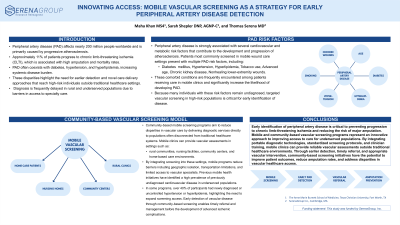
A narrative evaluation of evidence related to mobile health programs, vascular diagnostic tools, and screening guidelines was conducted to outline key components for implementing a mobile vascular screening protocol. This included reviewing literature on the performance and clinical utility of ankle-brachial index (ABI), toe-brachial index (TBI), and handheld Doppler assessments, as well as examining training requirements, workflow considerations, and feasibility of automated diagnostic devices.
Results:
Mobile health clinics have demonstrated effectiveness in identifying undiagnosed cardiovascular risk factors and improving access to care among vulnerable populations [5-7]. Studies show high rates of newly discovered hypertension, hyperlipidemia, and abnormal ABI/TBI results when screening is performed in community settings [8,9]. Automated ABI/TBI devices display strong diagnostic accuracy and are well suited for mobile environments. A structured implementation model, featuring clinician training, supervised interpretation, and phased pilot deployment, can achieve high concordance with expert vascular readers. Integrating such tools into mobile wound and vascular clinics enables earlier PAD detection and supports timely referral for comprehensive vascular evaluation when results are inconclusive [10].
Discussion:
Mobile vascular screening presents a feasible, impactful solution for reducing disparities in PAD diagnosis and outcomes. By leveraging portable diagnostic technologies and standardized workflows, mobile programs can deliver reliable vascular assessments directly to underserved communities. Early identification of PAD through mobile screening has the potential to decrease preventable amputations, improve patient quality of life, and enhance cost-effectiveness within the healthcare system. Continued evaluation of pilot programs will help refine best practices and advance equitable vascular care.