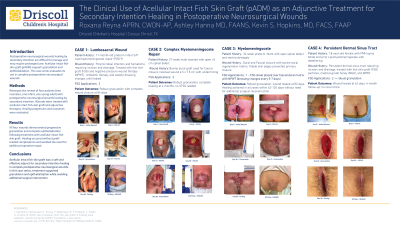
Introduction: To evaluate the clinical use of acellular intact fish‑skin graft (pADM) as an adjunctive treatment for secondary‑intention healing in postoperative neurosurgical wounds at a children’s hospital.
Methods: A retrospective descriptive review was conducted of four patients—two neonates, one infant, and one young adult—who required secondary‑intention healing after neurosurgical repair. Fish skin graft, medical-grade honey, and negative-pressure wound therapy were used. Dressing changes were performed every 3-5 days until complete healing. Data included wound characteristics, graft application, healing progression, complications, and need for further operative management.
Results: Across all four cases, pADM was well‑tolerated with no graft‑related adverse events. Wounds demonstrated accelerated granulation over vulnerable tissue and progressed to full epithelialization. The graft supported moisture balance, reduced wound burden, and promoted sufficient granulation to avoid further operative repair. Healing times were shorter than expected for comparable neurosurgical wounds managed with traditional dressings alone.
Discussion: This case series suggests that acellular intact fish‑skin graft is a safe and effective adjunct for secondary‑intention healing in complex pediatric neurosurgical wounds. Findings support further prospective evaluation and development of standardized protocols for their integration into pediatric neurosurgical wound care.

.jpg)