
.jpg)
Case Series/Study
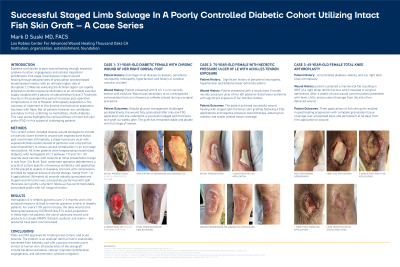
Diabetes contributes to poor wound healing through impaired cytokine function, angiogenesis and cellular migration/proliferation. End stage renal disease impairs wound healing through delayed rates of granulation and decreased keratinization kinetics with an ultimate higher rate of disruption.1,2 Wounds overlying the Achilles region rapidly progress to tendon exposure secondary to an unreliable vascular supply coupled with a paucity of subcutaneous tissue.3 Untreated malignancy inhibits wound healing. Traumatic injuries in the postoperative period increases post-operative complications in the orthopedic arthroplasty population. Delayed presentation of thermal burns is linked to infection and contractures. The mainstay of treatment of this diverse reconstructive population has been with flaps. Not all patients are candidates secondary to their underling co-morbidities. This case series highlights the clinical efficacy of fish skin xenografts in this subset of challenging patients.
Methods:
The current cohort included diverse wound etiologies to include a traumatic lower extremity wound with exposed bone status post recent knee arthroplasty, a stage 4 pressure ulcer with exposed Achilles tendon devoid of peritenon, a dorsal foot wound secondary to venous access complication in an end stage renal patient and a dorsal foot wound with necrotizing fasciitis and untreated chronic lymphocytic leukemia. All four patients were longstanding uncontrolled diabetics with hemoglobin A1c’s between 7.5 and 11.7All wounds were necrotic with cellulitis at initial presentation (range in size from 3 to 220cm). Each underwent operative debridement; a course of culture specific intravenous antibiotics and application of fish skin xenografts placed at weekly or biweekly intervals with compression provided by negative pressure wound therapy. (range from 1 to 6 applications) Ultimately all wounds robustly granulated and healed via staged split thickness skin grafts or secondary intention. Long term follow up has confirmed stable and pliable grafts with full range of motion.
Results:
Hemoglobin A1c reflects glycemia over 2-3 months and is the standard measure utilized to monitor glycemic control in diabetic patients. For every 1.0% point increase, the daily wound area healing decreases by 0.028cm2/day. To avoid amputation in these high-risk patients, the use of advanced wound care products to include CAMPS (Cellular, acellular and matrix – like products) have been recommended.
Discussion:
Fish skin xenografts are FDA approved for treating most chronic and acute wounds. The product is an acellular dermal matrix sustainably harvested from Icelandic cod with a porous microstructure similar to human skin. Characteristics of the xenograft include bacterial resistance, cellular migration/proliferation, angiogenesis, and inflammatory cytokine mitigation.